Category: Uncategorized

  • Interview Questions for Data Scientists

    Great data scientists come from such diverse backgrounds that it can be difficult to get a sense of whether someone is up to the job in just a short interview. In addition to the technical questions, I find it useful to have a few questions that draw out the more creative and less discrete elements of a candidate’s personality. Here are a few of my favorite questions.

    1. What was the last thing that you made for fun?

      This is my favorite question by far — I want to work with the kind of people who don’t turn their brains off when they go home. It’s also a great way to learn what gets people excited.

    2. What’s your favorite algorithm? Can you explain it to me?

      I don’t know any data scientists who haven’t fallen in love with an algorithm, and I want to see both that enthusiasm and that the candidate can explain it to a knowledgable audience.

      Update: As Drew pointed out on Twitter, do be aware of hammer syndrome: when someone falls so in love with one algorithm that they try to apply it to everything, even when better choices are available.

    3. Tell me about a data project you’ve done that was successful. How did you add unique value?

      This is a chance for the candidate to walk us through a success and show off a bit. It’s also a great gateway into talking about their process and preferred tools and experience.

    4. Tell me about something that failed. What would you change if you had to do it over again?

      This is a tricky question, and sometimes it takes people a few tries to get to a complete answer. It’s worth asking, though, to see that people have the confidence to talk about something that went awry, and the wisdom to have recognized when something they did was not optimal.

    5. You clearly know a bit about our data and our work. When you look around, what’s the first thing that comes to mind as “why haven’t you done X”?!

      Technical competence is useless without the creativity to know where to focus it. I love when people come in with questions and ideas.

    6. What’s the best interview question anyone has ever asked you?

      I’d like to wish for more wishes, please.

    I’m always looking for new and interesting things to add to my list, and I’d love to hear your suggestions.

  • Getting Started with Data Science

    I get quite a few e-mail messages from very smart people who are looking to get started in data science. Here’s what I usually tell them:

    The best way to get started in data science is to DO data science!

    First, data scientists do three fundamentally different things: math, code (and engineer systems), and communicate. Figure out which one of these you’re weakest at, and do a project that enhances your capabilities. Then figure out which one of these you’re best at, and pick a project which shows off your abilities.

    Second, get to know other data scientists! If you’re in New York, try the DataGotham events list to find some meetups, and make sure to stay for the beers. Look for groups, like DataKind, that need data skills put to work for good. No matter how much of a beginner you might be, your enthusiasm will be appreciated, you’ll learn things, and you’ll meet great people. And if you can’t find a physical meetup close to you, start one, or join the twitter discussion.

    Third, put your projects out in public. Share them on Github, your blog, and Twitter. Explain why you thought the question was interesting, where you got the data (and good data is everywhere), and how you came to a conclusion. It doesn’t have to be perfect. A couple examples of data projects motivated by nothing more than the author’s curiosity are  Yvo’s TechCrunch analysis and Drew and John’s Ranking the Popularity of Programming Languages.

    Finally, you can start right here. What advice do you give? What great projects have you seen lately? Share them in the comments.


  • Where’s the API that can tell me that this photo contains a puppy and a can of Coke?

    Where’s the API that can tell me that this photo contains a puppy and a can of Coke?

    puppy and a can of coke

    Photo by Ahmad van der Breggen on Flickr.

    We’ve gotten very good at extracting and disambiguation entities from text data. You can license a commodity system, and there are API and even open source tools that work fairly well.

    However, a large percentage of content that people share is not primarily text (a back-of-the-envelope guess says around 18%), and we currently have very little automated insight into that content.

    I know this is a very hard problem, but I’m continuously surprised by how few people seem to be working on it. Any ideas?


  • Help, I’m the first data scientist at my company!

    Help, I’m the first data scientist at my company!

    I moderated a panel at DataGotham with Adam Laiacano from Tumblr, Fred Benenson from Kickstarter, and Roberto Medri from Etsy about being the first data scientist at a company. We covered everything from what people’s job responsibilities are, the tools they use, successes, failures, how they are integrated into an organization, and how they have hired other data scientists to join them. The panelists were concise, articulate, and intelligent. Watch it below!


  • Hey Yahoo, You’re Optimizing the Wrong Thing

    Hey Yahoo, You’re Optimizing the Wrong Thing

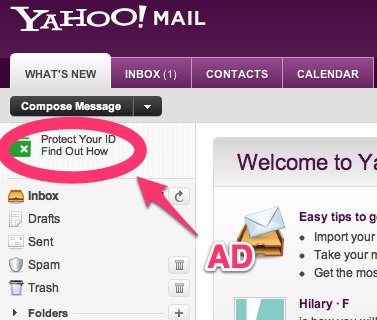
    I was visiting my grandparents yesterday, and my grandfather asked for help e-mailing an article to some of his friends. I asked him to show me how he normally writes an e-mail, and taught him the magic of copy and paste (it is amazing if you haven’t seen it before) but I noticed that in the course of sending an e-mail and checking on his inbox, he clicked on this ad three times.

    When I asked about it, he didn’t realize he had clicked the ad — he just thought these screens popped up randomly — because he didn’t realize that his hands were shaking on the trackpad.

    I’m sure the data says that that’s the optimal place on the screen for the ad. I’m sure tons of people ‘click’ on it. I’m also sure it’s wrong, and it results in a terrible experience.

    It’s common sense, but experiences like this are great reminders that data only takes us so far, and creativity and clear thinking are always required to find the best solutions.

    Yahoo, please fix this!